

What to Wear With a Kimono Dress: The Complete Accessories and Layering Guide
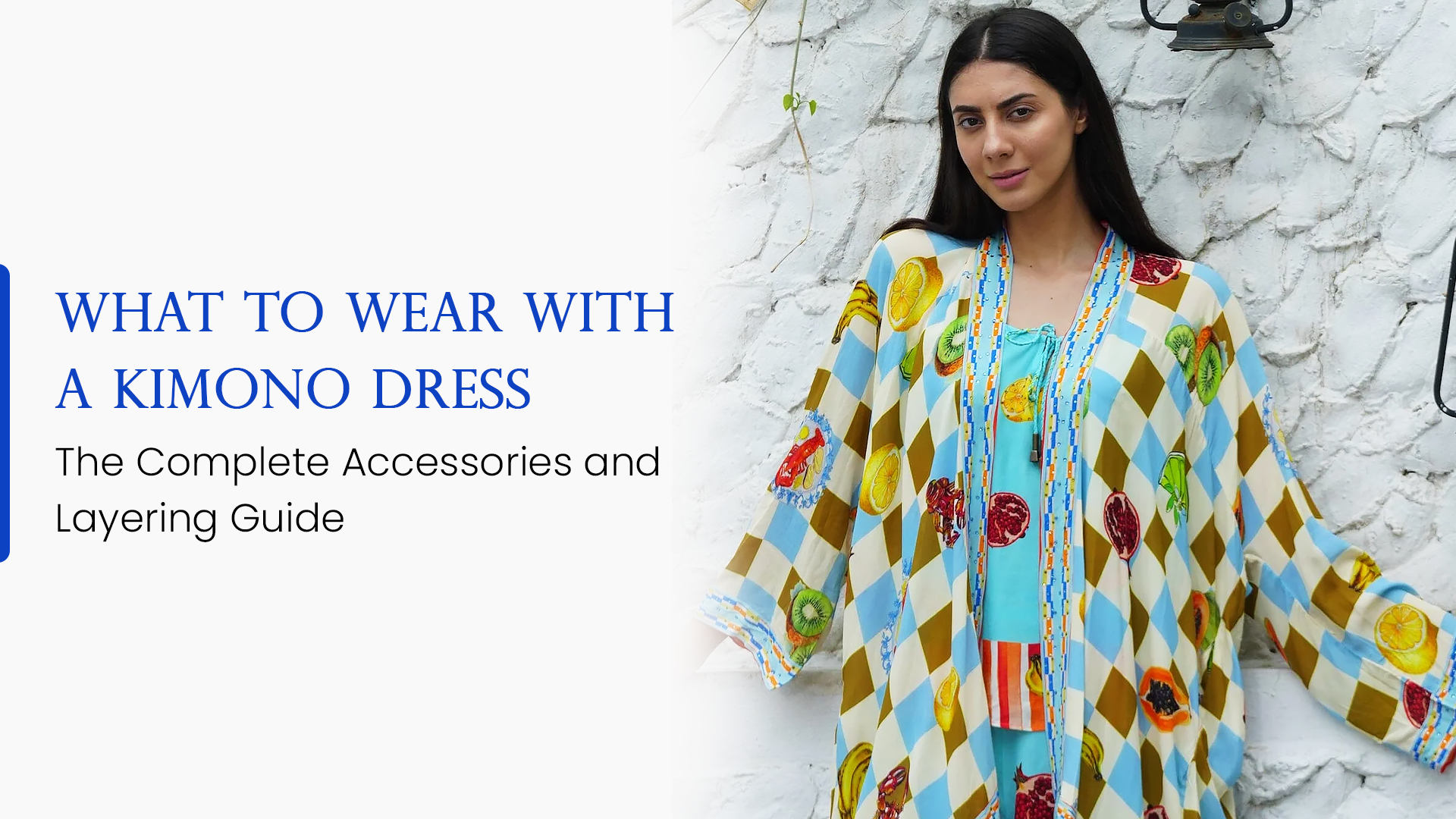
A kimono dress is one of the most complete garments you can own. It arrives with a silhouette, a print, a colour story, and a sense of occasion already built into it. In many ways, it requires very little from the woman wearing it.
And yet, knowing what to wear with a kimono dress, which accessories to add, how to layer it for different settings, which shoes and bags complete it without competing with it, is the difference between a look that feels finished and one that feels like it stopped halfway.
This is your complete guide to styling a kimono dress from the ground up.
The Kimono Dress as a Canvas, Not a Costume
The first and most important thing to understand about styling a kimono dress is that its strength lies in restraint.
A boldly printed kimono dress in a rich silk or moss silk fabric is already doing significant visual work before you add a single accessory. The print carries colour, pattern, and personality simultaneously. The silhouette, fluid and long, creates an elegant, considered line that requires no structural support from what you put around it.
This means the accessories you choose with a kimono dress are not there to build the look. They are there to complete it. The distinction matters enormously in practice. Building suggests adding. Completing suggests knowing when to stop.
The women who wear kimono dresses most beautifully are the ones who add two or three carefully chosen pieces and then deliberately put everything else back. That edited confidence is the whole aesthetic.
The Best Accessories to Wear With a Kimono Dress
Jewellery is where most women make their first decision when accessorising a kimono dress, and the principle here is consistent regardless of the occasion.
Choose one statement piece and let everything else be quiet. If you are wearing gold statement earrings, skip the necklace entirely or choose the finest, most delicate chain available. If a bold cuff or bracelet is your focal point, keep earrings simple. The kimono dress already has a strong visual presence. Your jewellery should punctuate it, not compete with it.
Gold works more naturally with kimono dresses than silver in most cases. The warm tones of gold respond beautifully to the rich, saturated print palettes that define quality resort kimono dresses, particularly in terracotta, cobalt, and deep jewel tone colourways.
A silk scarf is the second most effective accessory addition to a kimono dress outfit. Tied loosely at the neck, worn as a hair wrap, or knotted through the handle of your bag, a printed scarf in a complementary tone adds a layer of intentionality to the look that feels effortless precisely because it is.
The key when adding a scarf to an already printed kimono dress is tonal rather than matching. Choose a scarf that picks up one colour from the dress's print rather than attempting to match the pattern. One shared colour creates cohesion. An exact pattern match creates competition.
A printed headband is the lower-effort version of the scarf styling moment. Worn across the forehead or set back from the hairline, a headband in a complementary print adds personality to a kimono dress outfit with minimal deliberation.
How to Layer a Kimono Dress for Different Occasions
The layering conversation around a kimono dress is a short one, because the kimono is itself a layering piece for other garments. When you are wearing it as the primary piece, the layering logic inverts.
For a beach or poolside setting, a kimono dress worn open over swimwear is one of the most naturally elegant resort looks available. Leave it untied, let it move in the breeze, and the combination of a printed kimono catching the light over a simple swimsuit is precisely the kind of effortless beauty that resort dressing is built around.
For an evening occasion, a long silk kimono dress worn closed and loosely belted becomes a full-length gown with genuine presence. A thin belt in a leather or fabric that complements the dress's palette defines the waist without introducing a structural element that fights the kimono's natural fluidity.
For a cooler evening or an air-conditioned setting, a fine knit or a silk camisole layered beneath an open kimono dress adds warmth without adding visual noise. The inner layer should be tonal, almost invisible in colour, so the kimono remains the clear primary piece.
Our guide to how to style jumpsuits for an Australian holiday covers similar day-to-night layering principles that apply equally well to kimono dress styling across different settings.
Shoes That Work With a Kimono Dress Every Time
Footwear is where the occasion level of a kimono dress outfit is most clearly established, and the range of options is wider than most women initially consider.
Flat leather sandals are the most versatile daytime choice. They complement the relaxed, fluid quality of a kimono silhouette without introducing formality the setting does not call for. A simple, well-made leather sandal in tan, cognac, or a neutral that sits within the dress's colour palette carries the look cleanly across beach days, coastal lunches, and afternoon exploring.
Strappy heeled sandals are the evening elevation. A mid to high heel in a neutral metallic or a tone drawn from the dress's print shifts the entire register of a kimono dress outfit from resort casual to genuinely dressed. The heeled sandal adds height, which extends the kimono's long vertical line, and adds occasion weight, which signals that the setting has changed even when the dress has not.
Espadrilles occupy the middle ground between the two. Slightly more elevated than a flat sandal, comfortable enough for a full day of wear, and carrying a natural resort quality that suits the kimono silhouette particularly well. For summer brunch and casual daytime resort settings in Australia, the espadrille is almost always exactly right.
What does not work with a kimono dress is overly structured or heavy footwear. Chunky boots, stiff block heels, or highly architectural shoe styles fight the fluidity that defines the kimono silhouette and introduce a contradiction the outfit cannot resolve elegantly.
Bags and Clutches That Complete the Look
The bag you carry with a kimono dress follows the same occasion logic as your footwear choice, and the two should always be decided together rather than independently.
For daytime, a woven tote or a canvas carry bag in a natural texture adds a relaxed, resort quality that complements a kimono dress's inherent ease. Choose a bag large enough to carry everything you need for a full day without being so oversized that it overwhelms the dress's silhouette. Natural materials, raffia, woven cotton, light leather, work best in warm-weather resort settings.
For evening, a printed silk clutch is the definitive companion to a kimono dress at dinner. Choose a clutch that pulls one colour from the kimono's print rather than matching it exactly. The result is a look that feels coordinated without appearing costume-like, considered without appearing contrived.
The clutch size matters as much as the colour. A small to medium clutch maintains the elegant proportions of a kimono dress outfit. An oversized clutch or an evening bag that is too structured introduces a weight that the dress's fluid silhouette cannot comfortably absorb.
Browse the full Bondi bags and clutch collection for options in prints and tones that work naturally alongside this season's kimono dress styles.
Building a Full Kimono Dress Outfit for Day and Night
Bringing everything together, here are two complete outfit formulas that work consistently well for kimono dresses in Australian resort settings.
For a daytime beach or coastal lunch outfit, wear your kimono dress open over a simple swimsuit or a linen cami and shorts. Add flat leather sandals in tan, a woven tote in a natural texture, a silk scarf tied in the hair picking up one colour from the dress's print, and a simple gold bangle. That is the complete look. Nothing more is needed.
For an evening beachside dinner or resort occasion, wear your kimono dress closed and loosely belted. Add strappy gold heeled sandals, a printed silk clutch in a complementary tone, and a pair of gold statement earrings. Keep the neck bare or add the finest chain necklace you own. That is four deliberate additions to the dress, and the result is a look that reads as genuinely dressed and entirely effortless simultaneously.
The signature prints defining Australian resortwear in 2026 are worth exploring alongside this guide, particularly if you are choosing a new kimono dress this season and want to understand which print directions have the most versatility for outfit building.
Explore the complete Bondi kimono dress collection and find the piece your accessory edit has been waiting for. And if you are building a broader resort wardrobe around it, the Bondi maxi dress collection and full accessories range are the natural next steps.
Frequently Asked Questions
What accessories go with a kimono dress? The most effective accessories for a kimono dress are a pair of gold statement earrings, a silk scarf in a complementary tone, and either a woven tote for day or a printed clutch for evening. Keep the total number of accessories to two or three. A boldly printed kimono dress already has strong visual presence and benefits most from accessories that complete rather than crowd the look.
What shoes should I wear with a kimono dress? Flat leather sandals work best for daytime and casual resort settings, while strappy heeled sandals are the most elegant evening choice. Espadrilles are an excellent middle-ground option for brunch and coastal daytime occasions. Avoid heavy or overly structured footwear, which contradicts the fluid, relaxed quality of the kimono silhouette.
Can you wear a belt with a kimono dress? Yes. A thin belt in a leather or fabric tone that complements the dress's palette is a clean way to define the waist when wearing a kimono dress closed. Choose a belt that sits naturally at the waist rather than forcing definition at an unnatural point. A belt works particularly well for evening occasions where a slightly more structured silhouette is appropriate.
How do you layer a kimono dress for a cooler evening? For a cooler evening, layer a fine silk camisole in a tonal colour beneath an open kimono dress. The inner layer should be as close to invisible in colour as possible so the kimono remains the primary visual piece. Alternatively, a long kimono dress worn closed and belted provides sufficient coverage for most Australian summer evenings without requiring an additional layer.
What bag goes with a kimono dress for evening? A printed silk clutch in a tone that picks up one colour from the kimono's print is the most considered evening bag choice. Choose a small to medium size that maintains the elegant proportions of the outfit. A clutch that matches the dress too exactly can look costume-like, while one that shares a single colour from the print creates cohesion without appearing overly matched.