

What Fabric Is Best for a Kimono Dress in the Australian Summer Heat?
When the temperature climbs and the humidity settles in, what you wear matters as much as where you wear it. A kimono dress is one of the most effortless summer pieces a woman can own — fluid, forgiving, and endlessly elegant — but not all kimono dresses are created equal. The wrong fabric will leave you feeling sticky and uncomfortable before you've even reached the pool. The right one will feel like a second skin all day long.
If you're shopping for a kimono dress to wear through the Australian summer, this guide breaks down exactly which fabrics to look for, which to avoid, and how to get the most out of your piece — whether you're at a beach resort, a garden lunch, or stepping off a long-haul flight.
Why Fabric Is Everything When It Comes to a Kimono Dress
A kimono dress earns its reputation as the ultimate resort wardrobe staple because of its silhouette — open, layered, and relaxed. But silhouette alone won't keep you cool when the mercury hits 38 degrees in Queensland or the humidity wraps around you in tropical Far North Australia. The fabric is what determines whether your kimono dress genuinely performs in the heat or simply looks good on a hanger.
The properties to prioritise in hot weather are breathability, moisture management, and weight. You want a fabric that allows air to circulate close to the skin, moves moisture away from your body rather than trapping it, and drapes without clinging. Natural fibres and high-quality engineered textiles both have a role to play here — it comes down to understanding what each one offers.
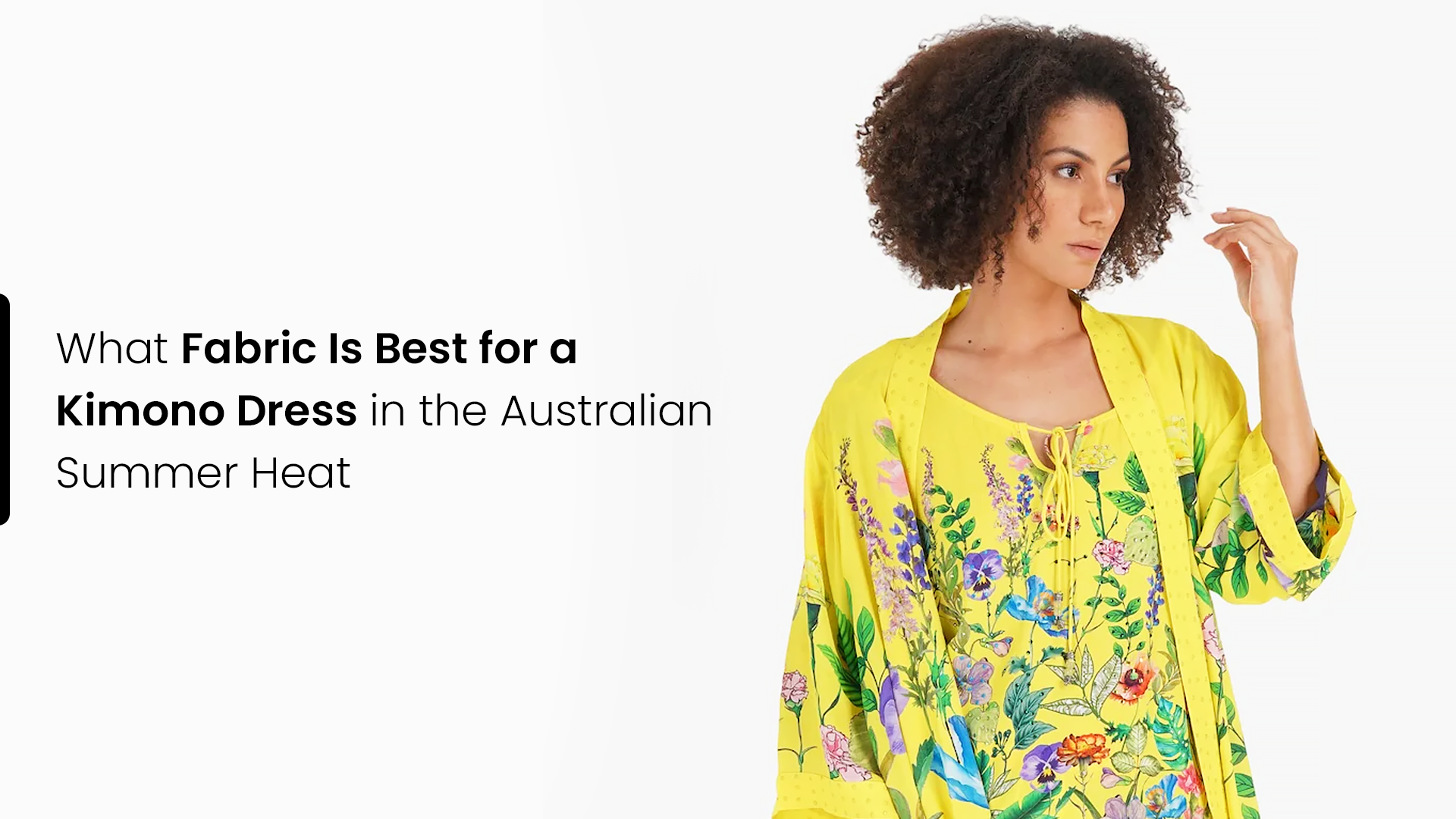
The kimono dresses at Bondi Resort Wear are built around three specific fabrics chosen precisely for the Australian climate: 100% silk, moss silk, and premium Bemberg. Each has a distinct character, and each suits a slightly different lifestyle and occasion.
Silk: The Gold Standard for a Luxury Kimono Dress
There is a reason silk has been worn in hot climates for centuries. As a natural protein fibre, it has an exceptional ability to regulate temperature — keeping you cool when it's warm and providing a light layer of warmth when there's a breeze. It absorbs moisture without feeling damp, dries quickly, and has a natural lustre that photographs beautifully in any light.
For a kimono dress, silk is the most luxurious choice. The weight is minimal, the drape is extraordinary, and the way it catches the light gives even a simple silhouette an elevated quality that synthetic fabrics simply cannot replicate. Silk also accepts print exceptionally well, which is why hand-illustrated prints show their true depth and richness on a silk base.
The Luxe Collection at Bondi Resort Wear uses 100% silk throughout. If you're investing in a kimono dress for international travel, a special occasion, or simply because you believe in owning fewer, better things, a silk kimono dress is the piece you'll reach for again and again. Silk benefits from hand washing or a delicate machine cycle in a mesh bag — treat it with care and it will last for years.
Moss Silk: The Smart Choice for Everyday Resort Wear
Moss silk occupies a beautifully practical middle ground. It has the fluid, light-catching quality of silk with a slightly more structured drape, making it exceptionally flattering across a wide range of body shapes. The texture is softer than standard silk charmeuse, with a matte finish that feels relaxed rather than formal — perfect for the effortless dressing that defines Australian resort style.
From a performance perspective, moss silk breathes well, resists creasing far better than pure silk, and maintains its shape through a full day of travel or social activity. It's also more forgiving to care for, making it a genuinely wearable luxury rather than a piece you save for special occasions.
The Elite Collection is where you'll find Bondi Resort Wear's moss silk pieces. Whether you're wearing a printed kimono dress over swimwear at a resort, layering it over maxi dresses for an evening dinner, or packing it into a carry-on for your next trip, moss silk delivers consistently.
Premium Bemberg: Lightweight, Breathable, and Built to Travel
Bemberg — technically a form of cupro — is one of the most underrated fabrics in resort fashion. Derived from cotton linter, it has a silk-like hand feel but performs brilliantly in humid conditions. It's antistatic, which means it won't cling, and it has excellent moisture absorption properties without feeling heavy or wet against the skin.
For women who travel frequently and want a kimono dress that can go from a morning excursion to an afternoon cocktail without needing to be steamed or changed, premium Bemberg is the answer. It shakes out wrinkle-free from a suitcase, moves beautifully as you walk, and remains genuinely comfortable through hours of wear in high humidity.
The Signature Collection uses premium Bemberg throughout, making it the ideal entry point into luxury resort wear that performs as well as it looks. It's the fabric choice for the intentional traveller who refuses to compromise on style or practicality.
What to Avoid Wearing in the Australian Summer Heat
Polyester, viscose blends, and heavy woven cottons are worth avoiding when you're dressing for genuine Australian heat. Polyester in particular traps body heat and moisture, which creates discomfort quickly. While budget-friendly, it rarely delivers the fluid drape that defines a beautiful kimono dress, and it shows perspiration and static in ways that work against you in warm weather.
Heavily structured fabrics — anything with significant body or stiffness — also miss the point of a kimono dress. The silhouette is designed to be soft and unconstructed. When the fabric fights against that, you lose both comfort and elegance.
If you're building a summer wardrobe for Australian conditions, the fabric hierarchy is simple: silk at the top for luxury occasions, moss silk for versatile everyday resort dressing, and premium Bemberg for travel and high-activity days. Explore the full resort wear edit at Bondi Resort Wear to see how these fabrics translate into wearable, beautiful pieces.
How to Style a Kimono Dress for Maximum Summer Impact
A kimono dress is as close to a wardrobe formula as resort dressing gets. Worn open over a swimsuit, it becomes an effortless beach cover-up. Belted at the waist, it transforms into a standalone dress for a long lunch that extends into the evening. Layered over wide-leg trousers or linen pants, it doubles as a sophisticated resort set.
A few styling notes worth keeping in mind for summer:
- Footwear: Flat strappy sandals or minimal mules keep the silhouette relaxed. Heeled slides shift the look into evening territory.
- Colour palette: Deep jewel tones and bold hand-illustrated prints photograph brilliantly in natural light. Bondi Resort Wear's exclusive prints are designed specifically with this in mind.
- Accessories: Keep them minimal. A quality clutch bag or a single statement piece is all a kimono dress needs. Browse the accessories collection for pieces designed to complement the silhouette.
- Layers: A kimono dress worn open over a simple slip or cami adds dimension to a summer look without adding warmth.
For more pairing ideas and outfit formulas built around the Australian resort lifestyle, the Style Guide is worth a visit — it's full of practical guidance written specifically for the Bondi Resort Wear woman.
FAQ
What is the best fabric for a kimono dress in hot weather? The best fabrics for a kimono dress in hot weather are 100% silk, moss silk, and premium Bemberg (cupro). All three are lightweight, breathable, and moisture-managing — keeping you cool without clinging. Silk is the most luxurious option and regulates temperature exceptionally well. Moss silk offers a slightly more structured drape and resists creasing. Premium Bemberg is the best choice for travel, shaking out wrinkle-free and performing well in humidity.
Is a kimono dress suitable for the Australian summer? Yes — a kimono dress is one of the best pieces you can wear in the Australian summer, provided it's made from the right fabric. Lightweight natural fibres or high-quality engineered textiles like Bemberg allow air to circulate and wick moisture from the skin. Avoid synthetic fabrics like polyester, which trap heat. An Australian-designed kimono dress in silk or moss silk will feel comfortable through even the most humid summer days.
Can you wear a kimono dress as a beach cover-up? Absolutely. A kimono dress worn open over a swimsuit is a classic beach resort look. Opt for a lightweight fabric like silk or moss silk that dries quickly and won't feel heavy if it catches a splash. The open silhouette means it slips on and off easily, and a longer length provides sun coverage for the shoulders and arms during the hottest part of the day.
How do you style a kimono dress for a summer dinner? To take a kimono dress from daytime to dinner, belt it loosely at the waist for more structure and swap flat sandals for heeled mules or strappy sandals. Choose a printed kimono dress with depth — rich colours or hand-illustrated patterns read as intentional and elegant. Add a small clutch bag and keep other accessories minimal. A silk or moss silk kimono dress in a bold print is genuinely dinner-ready with very little effort.
What is the difference between a kimono dress and a kaftan? A kimono dress typically features a wrap-style or open-front silhouette with wide sleeves, inspired by the traditional Japanese garment. A kaftan is usually a closed, pull-over style with a central neckline opening, often in a more oversized, relaxed shape. Both are excellent resort wear options for hot weather and both perform best in natural or high-quality engineered fabrics. Bondi Resort Wear offers both styles across its collections.