

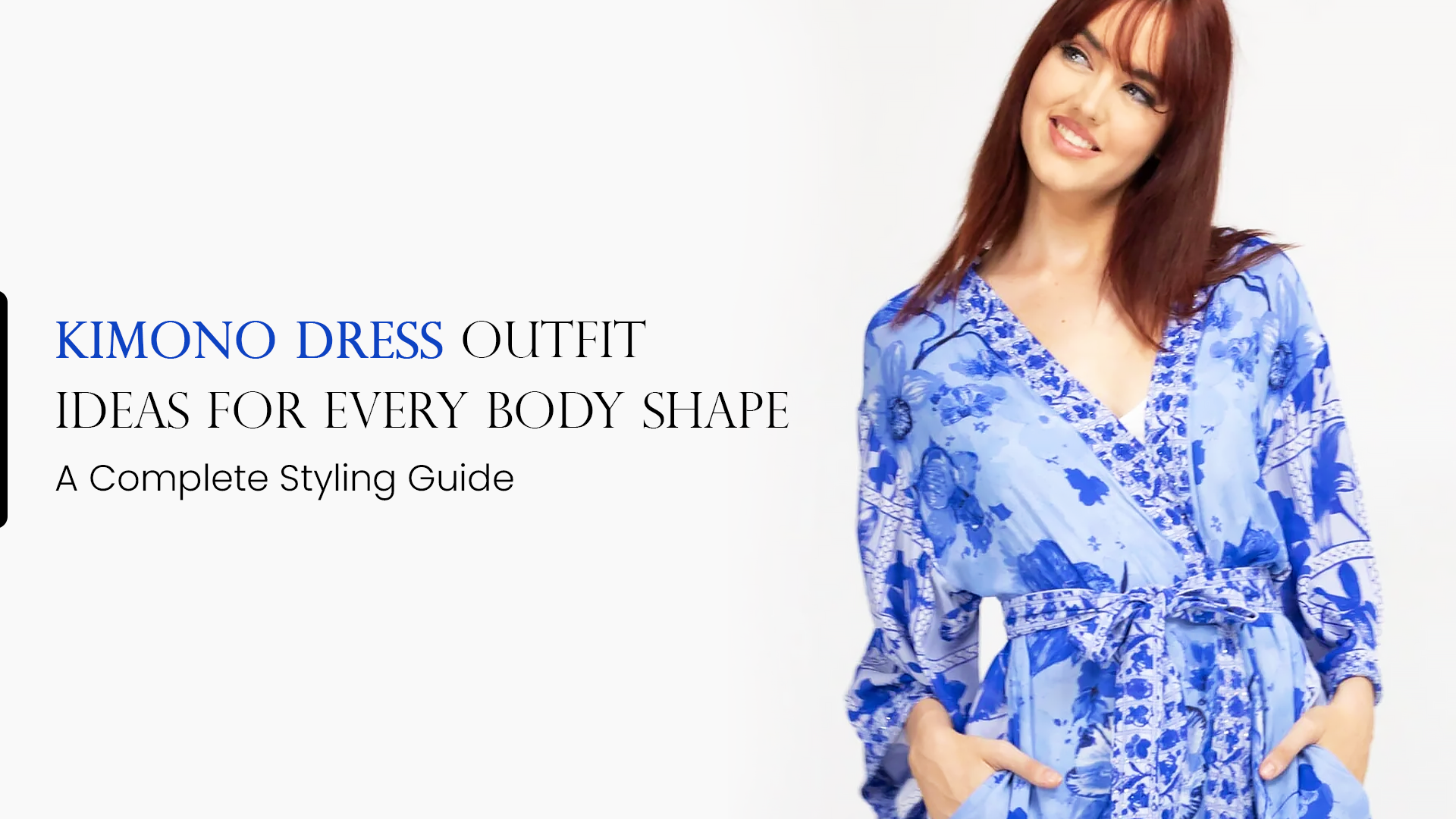
Kimono Dress Outfit Ideas for Every Body Shape: A Complete Styling Guide
The kimono dress has one quality that very few other garments can honestly claim. It genuinely flatters every body shape, not as a marketing claim, but as a structural reality.
The open front creates a long vertical line that elongates the silhouette. The fluid fabric skims rather than clings. The wide sleeve balances the shoulder and hip simultaneously. And the length options available across the kimono category, from mini through midi to floor-length, mean every woman can find the point at which the silhouette works most beautifully for her specific proportions.
Knowing which kimono dress outfit ideas translate most powerfully for your particular body shape is the difference between wearing a kimono that looks chosen and wearing one that looks accidentally right. This guide gives you both the principles and the specific combinations.
Why Kimono Dresses Work for Every Body Shape
Before addressing each body shape individually, it is worth understanding why the kimono silhouette is so consistently flattering across such a broad range of figures.
The kimono's open front creates a V-shaped neckline that draws the eye upward toward the face and creates an elongating vertical line through the centre of the body. This line is one of the most universally flattering design elements in fashion, and the kimono delivers it without any structural engineering. It is simply the natural consequence of the open-front silhouette.
The fluid fabric that defines quality kimono dresses in Australia, particularly in silk and moss silk, does not impose a shape on the body. It responds to the body's existing shape, skimming where the body is fuller and falling away where it is narrower. This responsiveness means the fabric works with every figure rather than requiring the figure to work with the fabric.
The wide sleeve creates a horizontal line at the shoulder and arm that balances both narrow and broader hip proportions depending on the body type. For women with narrower shoulders, it adds visual width. For women with broader hips, it creates balance by widening the upper body to meet the lower.
These three structural qualities, the vertical V-line, the responsive drape, and the balancing sleeve, make kimono dresses one of the most genuinely inclusive silhouettes in resort wear dressing.Kimono Dress Outfit Ideas for Hourglass Figures
The hourglass figure, defined by balanced shoulder and hip width with a narrower waist, is the body shape that the kimono dress most naturally celebrates.
The kimono's open front reveals the waist definition that is the hourglass figure's most distinctive quality. Worn closed and loosely belted, it creates a defined waist point that the silhouette then flows away from in both directions, emphasising the natural curve of the figure without imposing structure on it.
For hourglass figures, a floor-length kimono in a bold, saturated print worn with a thin belt at the natural waist is the strongest outfit formula. The belt defines without constricting, the length creates drama, and the print adds visual confidence that the balanced proportions of an hourglass figure carry beautifully.
Style with strappy heeled sandals that extend the vertical line, a simple silk clutch in a tone drawn from the print's palette, and a single piece of gold jewellery at the ear. The look is complete, confident, and entirely flattering to the figure beneath it.
For a more casual kimono dress outfit idea for daytime settings, an hourglass figure in a midi-length kimono worn open over a simple cami and wide-leg trouser creates a layered look with natural waist definition that works beautifully for coastal lunches and resort afternoons.
The Best Kimono Dress Styles for Apple and Fuller Figures
For apple-shaped figures where weight sits through the midsection, or for fuller figures more broadly, the kimono dress works most effectively when it draws the eye upward and creates a strong vertical line through the centre of the body.
The open front of the kimono is the most effective tool available here. It creates a continuous V-shaped line from neckline to hem that visually elongates the torso and draws attention upward rather than across. This line should remain unbroken through the midsection, which means wearing the kimono open rather than belted at the waist for the most elongating effect.
A floor-length kimono dress in a rich, jewel-toned print worn open over a solid-colour inner dress or wide-leg trouser and cami combination creates a strong outfit that celebrates the figure rather than attempting to minimise it. Choose an inner layer in a deep, tonal colour that sits close to but slightly darker than the kimono's background tone. The result is a cohesive, elongating look with genuine visual sophistication.
Prints for apple and fuller figures work best when they have a strong vertical element or when they are worn as a full-coverage pattern across the entire garment. Both approaches create a unified visual field that works with the body's natural width rather than against it.
Fabrics in the Elite Collection's Moss Silk are particularly well suited to this body shape. The natural drape of moss silk falls cleanly away from the body rather than clinging through the midsection, creating the elegant, fluid line that makes a kimono dress genuinely flattering rather than merely adequate.
How to Style a Kimono Dress for Pear Shaped Bodies
Pear-shaped figures, where the hips and thighs are the widest point of the body, benefit most from kimono dress outfit ideas that balance the upper and lower body visually.
The kimono's wide sleeve is the most effective balancing tool for pear-shaped figures. By adding visual width at the shoulder and upper arm, it creates a broader upper body impression that brings the shoulder line closer to the hip width, creating a more balanced overall silhouette.
For pear-shaped bodies, choose kimono dresses with sleeves that extend to at least the elbow or longer. Three-quarter and full-length sleeves maximise this balancing effect. Avoid very short or cap-sleeved kimonos, which narrow the shoulder line and draw more attention to the contrast between upper and lower body width.
Bold prints worn through the upper body and continuing into the lower body as a full-coverage pattern create visual cohesion that works with pear-shaped proportions rather than emphasising the difference between upper and lower. A bold botanical or geometric print that fills the entire kimono from neckline to hem is a more flattering choice for pear shapes than a print concentrated at the hem or lower body.
A midi-length kimono worn over wide-leg trousers in a complementary tone is a particularly strong daytime outfit formula for pear-shaped figures. The wide-leg trouser balances the hip width through volume, the kimono layer widens the shoulder to match, and the midi length creates a clean break at mid-calf that avoids drawing attention to the hip and thigh area.
Style with flat or low-heeled sandals that elongate the leg line, and keep accessories focused at the neckline and ear to draw the eye upward.
Kimono Dress Outfit Ideas for Rectangle and Athletic Figures
Rectangle and athletic figures, where the shoulder, waist, and hip measurements are relatively similar without significant natural curve, benefit from kimono dress outfit ideas that create the visual impression of curves rather than working with existing ones.
The most effective tool for rectangle figures in a kimono dress is the belt. A thin to medium belt worn at the natural waist point when the kimono is closed creates a defined waist point that the body's natural line does not provide. This single addition transforms a fluid, column-like silhouette into one with genuine visual curve.
Layering works particularly well for rectangle and athletic figures in kimono styling. A kimono worn open over a fitted inner dress or over a cami tucked into a full, flowing skirt creates the visual contrast between a narrower inner piece and a fuller outer layer that suggests curve without requiring it to be anatomically present.
Choose prints with horizontal or diagonal elements for rectangle figures. These print directions create the impression of width variation across the body that introduces visual curve into an otherwise straight silhouette. A bold geometric with strong diagonal lines, or a large floral with significant colour contrast between the centre and edges of the motif, both work well in this direction.
A short kimono worn over a fitted midi skirt in a complementary tone is one of the strongest rectangle figure outfit formulas. The volume of the skirt creates hip width, the fitted element between the skirt and the kimono creates a visual waist point, and the short kimono layer adds shoulder presence that balances the created hip width.
Styling Kimono Dresses for Petite and Tall Women
Petite and tall women both benefit from understanding how kimono dress length and print scale interact with their height to create the most flattering proportions.
For petite women, the most important principle is proportion. A floor-length kimono on a petite frame can overwhelm rather than elongate if the hem drags or if the sleeve length is not correctly calibrated to the arm. The most flattering length for petite women is typically a midi kimono that falls between the knee and the ankle, or a floor-length kimono worn with a small heel that restores the elongating proportion the length requires.
Print scale matters significantly for petite figures. Large-scale prints that cover a significant portion of the body can overpower a smaller frame. Medium-scale prints in vertically oriented patterns, botanical stems, geometric columns, or diagonal abstract arrangements, create the elongating line that works most beautifully with petite proportions.
Keep accessories for petite kimono styling minimal and fine-scaled. Large statement jewellery or oversized bags can overwhelm a smaller frame. Fine gold earrings, a small to medium clutch, and simple sandals maintain the proportion balance the outfit requires.
For tall women, the kimono is one of the most naturally flattering silhouettes available. The floor-length kimono in particular creates a dramatic, floor-to-ceiling elegance that shorter silhouettes cannot achieve. Large-scale prints carry their full visual impact on a taller frame and are always worth embracing with confidence.
Tall women can also carry bolder accessory choices alongside kimono dresses than petite frames can comfortably support. A larger clutch, longer earrings, and multiple fine-layered necklaces all work within the visual scale that height provides.
Our Bondi sizing guide provides specific garment measurements across all sizes to help you find the kimono length and fit that works most beautifully for your proportions before purchasing.
For a complete guide to accessorising your kimono dress outfit across all body types and occasions, our guide to what to wear with a kimono dress covers every accessory decision in detail.
Explore the full range of kimono style dresses at Bondi Resort Wear across all lengths, prints, and fabric tiers. And if you are building a broader inclusive resort wardrobe beyond the kimono, our guide to inclusive resortwear for every body shape covers the full silhouette range in the same depth.
For complementary pieces to wear alongside your kimono, the Bondi maxi dress collection and kaftan range offer the natural next pieces for a complete resort wardrobe, and the accessories collection provides the finishing pieces that complete every outfit formula covered in this guide.
Frequently Asked Questions
What kimono dress style suits an apple-shaped body?
A floor-length kimono dress worn open over a solid-colour inner layer creates the most flattering look for apple-shaped figures. The open front creates a continuous vertical V-line that elongates the torso and draws the eye upward. Choose a kimono in a full-coverage bold print and avoid belting at the waist, letting the fabric fall naturally away from the midsection for the most comfortable and elongating result.
Can petite women wear floor-length kimono dresses?
Yes, with two considerations. First, wear a small heel to restore the elongating proportion that a floor-length hem requires on a petite frame. Second, choose a medium-scale print in a vertically oriented pattern rather than a very large-scale motif that can overwhelm smaller proportions. A floor-length kimono on a petite woman with a heel and a considered print looks genuinely dramatic and beautiful.
How do you style a kimono dress to create curves on a rectangle figure?
Belt the kimono at the natural waist when worn closed to create a defined waist point. Layer it open over a fitted inner piece paired with a fuller skirt to create visual contrast between a narrower middle and a wider lower body. Choose prints with horizontal or diagonal elements that introduce visual width variation across the body. These three approaches create the impression of curves without requiring them to be anatomically present.
What length kimono dress is most flattering for tall women?
Tall women carry floor-length kimono dresses most beautifully. The length creates a dramatic, elongated elegance that shorter silhouettes cannot achieve, and tall frames provide the visual scale that large-print, floor-length kimonos require to look proportionate rather than overwhelming. Midi lengths also work well for casual daytime settings, but the floor-length kimono is the tall woman's most powerful styling choice.
What is the best kimono dress print for pear-shaped figures?
Full-coverage bold prints that extend from neckline to hem without concentrating pattern at the hip or lower body are the most flattering for pear-shaped figures. The unified visual field of a full-coverage print works with the body's natural width rather than drawing attention to the difference between upper and lower proportions. Look for kimonos with wide sleeves that add shoulder width to balance the hip line visually.