

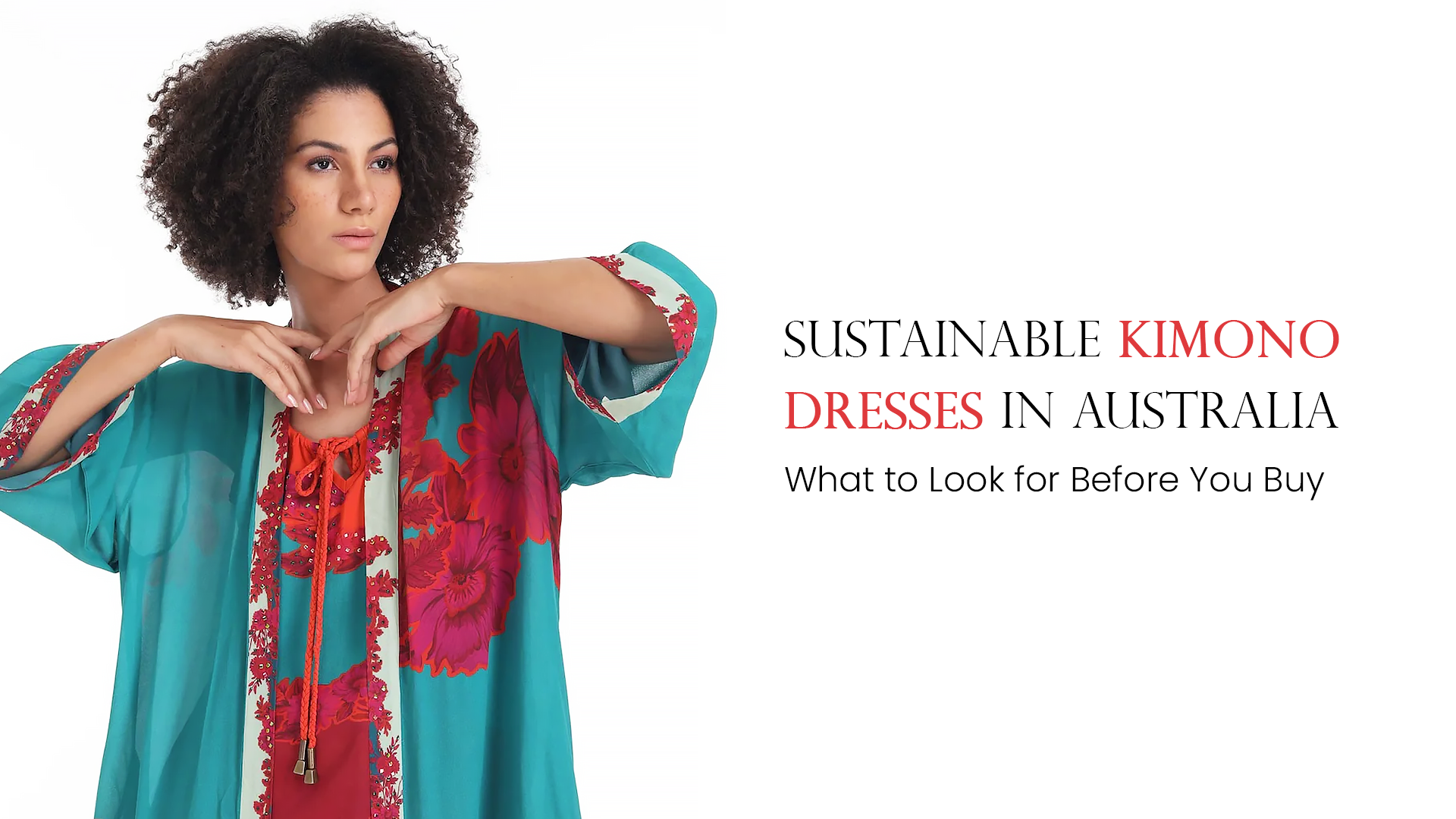
Sustainable Kimono Dresses in Australia: What to Look for Before You Buy
Australian women are asking better questions before they shop. Not just what does this look like, but where was it made, what is it made from, how long will it last, and what happens to it when I no longer wear it.
These are the right questions, and in the kimono dress category specifically, they have very clear answers once you know what to look for.
Kimono dresses in Australia span an enormous range of quality, production standards, and sustainability credentials. Understanding how to read a product beyond its price tag and its photography is the skill that separates a purchase you will wear for a decade from one that disappoints within a season.
This guide gives you exactly that.
Why Sustainability Matters More Than Ever in Kimono Dress Shopping
The global fashion industry is one of the most resource-intensive on earth, and the fast fashion end of the kimono dress market reflects that problem directly. Synthetic fabrics that degrade quickly, production practices that cut corners on worker welfare, and designs driven by seasonal trend cycles rather than genuine longevity are all characteristics of the unsustainable end of the category.
The good news for Australian women is that the sustainable alternative is not a compromise. A well-made silk or moss silk kimono dress from a designer label with genuine ethical credentials is not just the more responsible choice. It is the better product in every measurable way. It feels better, lasts longer, performs better in Australia's climate, and delivers more pleasure per wearing than any synthetic alternative at any price point.
Sustainability in kimono dresses Australia women should be looking for is not a single quality. It is a combination of fabric integrity, production ethics, design longevity, and care approach that together determine whether a piece genuinely earns its place in a considered wardrobe.
Understanding each element before you buy is the most powerful thing you can do as a consumer.
The Fabrics That Define a Truly Sustainable Kimono Dress
Fabric is the first and most important sustainability indicator in a kimono dress. It determines how the piece performs in wear, how long it lasts, and what environmental footprint its production carries.
Natural fibres are always preferable to synthetic ones from a sustainability standpoint. Silk, moss silk, and natural cotton all biodegrade at the end of their useful life rather than persisting in landfill for hundreds of years as synthetic alternatives do. They also require significantly less chemical processing in production than polyester and nylon, and they perform better in natural conditions, a critical quality for garments worn in Australia's warm climate.
Pure silk is the finest sustainable choice for a long kimono robe Australia women invest in seriously. A silk kimono from a brand with transparent sourcing practices is one of the most environmentally sound luxury fashion purchases available. Silk is a natural protein fibre produced by silkworms, and when its production chain is responsibly managed, it carries a considerably lower environmental footprint than petroleum-derived synthetic fabrics.
Moss Silk, used in Bondi Resort Wear's Elite Collection, delivers comparable drape, natural sheen, and cooling properties to pure silk with excellent everyday durability. For women who want the sustainability credentials of natural fibre at a slightly more practical price point, it is the strongest option in the kimono dress category.
What to avoid is straightforward. Any kimono dress described as "silky" rather than silk, any fabric composition that lists polyester, nylon, or acrylic as primary fibres, and any product where the fabric composition is unclear or unspecified. If a brand cannot or will not tell you exactly what its garments are made from, that is the answer you need.
What Ethical Production Actually Means for Australian Buyers
Sustainable fabric is one half of the sustainability equation. Ethical production is the other, and it is the half that fewer shoppers know how to evaluate.
Ethical production means fair wages and safe working conditions for every person involved in making the garment. It means transparent supply chains where the brand can account for where and how each piece is made. It means no exploitative labour practices at any point between the raw fibre and the finished product that arrives at your door.
For Australian buyers, ethical production also means supporting brands that take their supply chain responsibilities seriously enough to document and communicate them. Bondi Resort Wear's commitment to ethical and sustainable practices and its supplier code of conduct reflect this standard directly. These are not marketing gestures. They are operational commitments that shape how every piece in the collection is produced.
When evaluating any kimono dress brand for ethical credentials, look for specific, verifiable information rather than vague sustainability language. "We care about the planet" tells you nothing. A published supplier code of conduct, specific information about production facilities, and transparent communication about materials sourcing tell you something real.
The designer kimono dress market in Australia includes brands at every point on this spectrum. Spending a few minutes researching before you purchase is the most effective sustainable action available to you as a consumer.
How Quality and Longevity Are the Most Sustainable Choices You Can Make
The most sustainable kimono dress is the one you wear for ten years rather than one season. This sounds simple, but it is the sustainability principle that the fashion industry least wants you to internalise, because it directly reduces consumption.
A high-quality kimono dress in silk or moss silk, cared for correctly, will look better after fifty wears than a synthetic alternative looks after five. The fabric maintains its colour, its drape, and its structural integrity in a way that synthetic fibres simply cannot replicate over time.
The economics of quality also change the sustainability calculation dramatically. A silk kimono purchased for $350 and worn forty times across five years costs $8.75 per wear. A synthetic kimono purchased for $80 and worn eight times before it deteriorates costs $10 per wear, produces more waste, and delivers significantly less pleasure in the process.
Longevity is sustainability. Every additional year a garment stays in active use is a year it does not spend in landfill and a year you do not spend replacing it.
The kimono dress trends defining 2026 in Australia are also moving in a direction that supports longevity. Bold, exclusive prints and classic silhouettes do not date the way trend-driven designs do. A blue maxi kimono in an exclusive hand-illustrated print purchased this season will look as relevant in 2030 as it does today, because its design is not borrowed from a passing trend. It belongs to itself.
What to Look for in Print and Design Before You Buy
Print and design choices have sustainability implications that are worth understanding before you buy.
Exclusive prints are more sustainable than generic prints in a meaningful way. A design that belongs to one brand, created by a specific designer or illustrator, is not reproduced across fifty other labels simultaneously. This means the piece retains its distinctiveness across seasons rather than becoming identifiable as belonging to a specific trend moment. A piece that remains distinctive does not get discarded when the trend passes.
Scale and colour depth in a print also have longevity implications. Rich, saturated colours in large-scale prints, the kind defining the strongest kimono dresses in Australia this season, hold their visual impact across many years of wear. Pale or very fine prints tend to look washed and dated more quickly, reducing the period of active wear and increasing the likelihood of early replacement.
The colour directions most worth investing in from a longevity perspective are explored in our best resort wear colours 2026 guide. The palettes covered there are chosen specifically because they carry across multiple seasons rather than belonging exclusively to a single year.
How to Care for Your Kimono Dress to Make It Last
Sustainable purchasing decisions are only as valuable as the care practices that follow them. A silk kimono that is machine washed incorrectly or stored carelessly will not deliver the decade of wear its quality makes possible.
Hand washing in cool water with a gentle silk-formulated detergent is the correct approach for all silk and moss silk kimonos. Never use hot water, never wring the fabric, and never tumble dry. These three actions cause irreversible damage to natural fibre garments and are responsible for the premature deterioration of more quality pieces than any other single factor.
Dry your kimono flat or on a padded hanger in the shade. Australian sunlight is intense enough to cause visible colour fade in a single afternoon of direct exposure on a wet silk garment. Shade drying preserves colour integrity completely.
Store silk kimonos folded in acid-free tissue in a cool, dark drawer rather than hanging long-term. Extended hanging causes natural fibre garments to stretch at the shoulder under their own weight. Cedar blocks or lavender sachets deter moths without the chemical residue of synthetic alternatives.
Always store clean. Body oils and sunscreen residue that are invisible on the fabric will oxidise and cause yellowing over time if a piece is stored unwashed. Every piece should be washed before seasonal storage, regardless of how lightly it was worn.
Browse the complete sustainable kimono and resort wear collection at Bondi and find the piece that earns its place in your wardrobe for years rather than seasons. Every piece is crafted with the fabric quality, ethical production standards, and design integrity that sustainable purchasing deserves.
Frequently Asked Question
What makes a kimono dress sustainable in Australia?
A sustainable kimono dress in Australia combines natural fibre fabrics like silk or moss silk, ethical production with transparent supply chain practices, exclusive design that does not date seasonally, and the quality of construction that enables long-term wear. The most sustainable kimono dress is the one worn for many years rather than discarded after a season, making fabric quality and design longevity the two most important sustainability indicators.
What is the best sustainable fabric for a kimono dress in Australian weather? Pure silk and moss silk are the most sustainable and most practical fabric choices for kimono dresses in Australia. Both are natural fibres that biodegrade at the end of their useful life, both cool the body naturally in warm weather, and both maintain their drape and colour with proper care far longer than synthetic alternatives. They also perform better in the humidity of tropical holiday destinations that Australian women travel to regularly.
How do I know if a kimono dress brand is ethical?
Look for specific, verifiable information rather than general sustainability claims. A published supplier code of conduct, transparent production information, and clear fabric composition labelling are the minimum standards worth expecting from any brand you purchase from. Vague language about caring for the planet without specific operational commitments is not evidence of ethical practice.
How long should a quality silk kimono dress last?
A quality silk or moss silk kimono dress, cared for correctly with hand washing, shade drying, and proper storage, can last a decade or longer while maintaining its colour, drape, and structural integrity. The key variables are fabric quality at the point of purchase and care consistency across the life of the garment. A well-made natural fibre kimono is genuinely a long-term wardrobe investment.
Is it worth spending more on a designer kimono dress in Australia?
Yes, when the higher price reflects genuine quality differentials in fabric, production, and design rather than simply brand markup. A designer kimono dress in pure silk or moss silk with an exclusive print and ethical production credentials will cost more upfront and deliver significantly more value across its wearing life than a cheaper synthetic alternative. The cost per wear of a quality kimono dress is almost always lower than that of a fast fashion equivalent when calculated honestly.