

How Kaftans Flatter Different Body Shapes
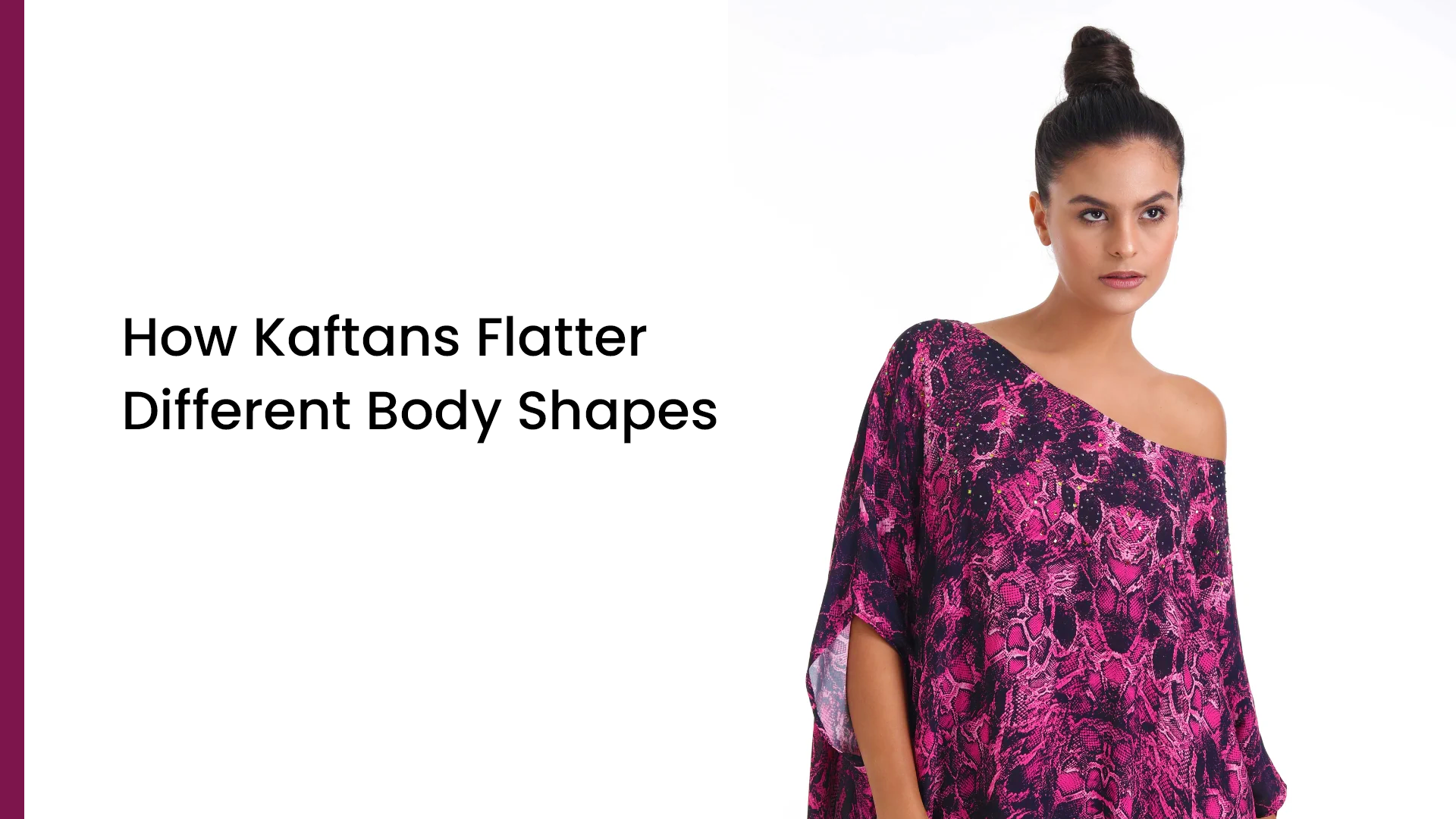
Kaftans have long been loved for their comfort, movement, and effortless elegance. But beyond their relaxed appeal, they are also surprisingly adaptable to different body shapes—the secret lies in fabric, cut, neckline, and length. When chosen thoughtfully, kaftans can enhance proportions, create balance, and highlight natural curves without feeling restrictive.
This guide explains how kaftans flatter different body shapes and how to choose the right silhouette for your frame. Whether you prefer a relaxed drape or a subtle structure, there is a kaftan style that works beautifully for you.
Why Kaftans Work for Almost Every Body Type
Unlike fitted dresses that rely on tailoring, kaftans are built around flow. That means they skim the body instead of clinging to it. This creates vertical movement, which naturally elongates the silhouette.
Because they do not depend on strict shaping, kaftans adapt well to:
• Curvy figures
• Athletic builds
• Petite frames
• Tall proportions
• Fuller busts
• Pear or apple shapes
The key is choosing the right variation rather than assuming all kaftans are identical. Exploring different silhouettes within a Kaftan's collection helps you understand how small design details change the overall effect.
Kaftans for Hourglass Shapes
Hourglass figures are defined by balanced shoulders and hips with a noticeable waist. The goal is not to hide this shape, but to complement it.
Best choices include:
• Soft V-neck kaftans
• Lightly adjustable waist styles
• Flow fabrics with gentle drape
• Mid to long lengths
Kaftans with optional waist ties or subtle shaping help highlight the natural waist without restricting movement. Avoid overly boxy cuts if you want to emphasise curves rather than soften them.
Flowing maxi styles work particularly well here. Many maxi dresses and long kaftans offer elegant options that maintain shape while staying comfortable.
Kaftans for Pear-Shaped Bodies
Pear shapes carry more volume at the hips and thighs compared to the upper body. The aim is to create visual balance between the top and the bottom.
Look for:
• Detailed or patterned upper sections
• V or open necklines
• Three-quarter sleeves
• Straight falling silhouettes
Kaftans naturally skim over the hips, which makes them excellent for pear shapes. Balanced drape avoids drawing attention to one area while maintaining overall harmony.
Short to midi lengths often work well here, especially for daytime wear.
Kaftans for Apple-Shaped Bodies
Apple shapes tend to carry more volume around the midsection. The focus is on elongation and gentle structure.
Helpful design features:
• Vertical prints
• Deep V necklines
• Straight or A line cuts
• Flow fabrics that do not cling
A kaftan that falls cleanly from the shoulders without excessive fabric at the waist creates a smooth vertical line. Avoid heavy fabric or stiff construction, as these can add bulk.
Longer kaftans are particularly flattering for apple shapes because they extend the line downward and create proportion.
Kaftans for Athletic or Straight Shapes
Athletic or rectangular body shapes often have balanced proportions with less waist definition. Kaftans can introduce softness and movement.
Strong choices include:
• Belted or adjustable styles
• Bold prints
• Layer friendly silhouettes
• Sleeve detailing
Because the frame is balanced, many styles work well. This body type can experiment with both short and long kaftans comfortably.
Layering with lighter outer pieces or exploring kimono-inspired cuts adds visual depth while maintaining ease.
Kaftans for Petite Frames
Petite women can absolutely wear kaftans, but proportion matters more than the size label.
Key considerations:
• Choose shorter or midi lengths
• Avoid overly wide sleeves
• Look for lighter prints
• Keep shoulder seams aligned
Floor-length kaftans can overwhelm petite frames unless tailored or carefully proportioned. Checking garment length is essential.
A kaftan fit guide for petite and tall women can help determine which hemline works best for your height.
Kaftans for Tall Women
Tall women often carry long silhouettes beautifully. Full-length kaftans and bold patterns look especially striking.
Ideal options include:
• Floor length designs
• Statement sleeves
• Strong print scale
• Flow fabrics with movement
Long kaftans enhance height rather than overpower it. Taller women can comfortably experiment with dramatic silhouettes.
The Role of Fabric in Flattering Shape
Fabric determines how a kaftan behaves on the body. Soft, breathable fabrics drape closer to the form, creating smooth lines. Stiff fabrics hold shape outward and may add visual width.
For most body shapes, flow fabrics are the safest and most flattering choice. They move naturally and respond to body contours without clinging to them.
Lightweight cotton, viscose blends, and silk blends are particularly effective for maintaining comfort and elegance.
How Length Changes the Effect
Length influences proportion more than many realise.
Short kaftans feel casual and balanced for petite frames.
Midi lengths are versatile for many heights.
Long kaftans elongate and feel elegant, especially for taller figures.
Choosing the right length for your height supports the natural effect of the silhouette.
Confidence Is the Final Fit Element
No matter your body shape, confidence transforms how any garment looks. Kaftans are designed for ease and comfort, which naturally supports confidence.
When you choose the right cut, fabric, and length, a kaftan becomes a flattering extension of your style rather than a compromise.
FAQs
Do kaftans suit all body shapes?
Yes. When chosen in the right length and fabric, kaftans can flatter hourglass, pear, apple, athletic, petite, and tall body types.
Are kaftans slimming
Flowy kaftans with vertical lines and breathable fabrics can create a lengthening effect, which many people perceive as slimming.
Should petite women avoid long kaftans?
Not necessarily, but proportion is key. Shorter or midi lengths often work better unless the long style is carefully designed for petite frames.
How should a kaftan fit
A kaftan should feel loose and comfortable, but sit correctly at the shoulders and neckline. It should skim the body rather than cling or overwhelm.
What fabric is most flattering in a kaftan
Soft, lightweight fabrics with natural drape are usually the most flattering because they create smooth vertical movement.